 برند Lonza کد N283-125.webp)

کیت تشخیص اندوتوکسین PYROGENT® Plus Gel Clot LAL Assay (with Endotoxin) | N283-125 | Lonza
ویژگیهای محصول
(0)
0
دیدگاه کاربران
وضعیت موجودی :
موجود
با بخش فروش در تماس باشید
قیمت :
1
تومان


کیت تشخیص اندوتوکسین PYROGENT® Plus Gel Clot LAL Assay (with Endotoxin) | N283-125 | Lonza
بخش فارسی
مروری جامع بر محصول
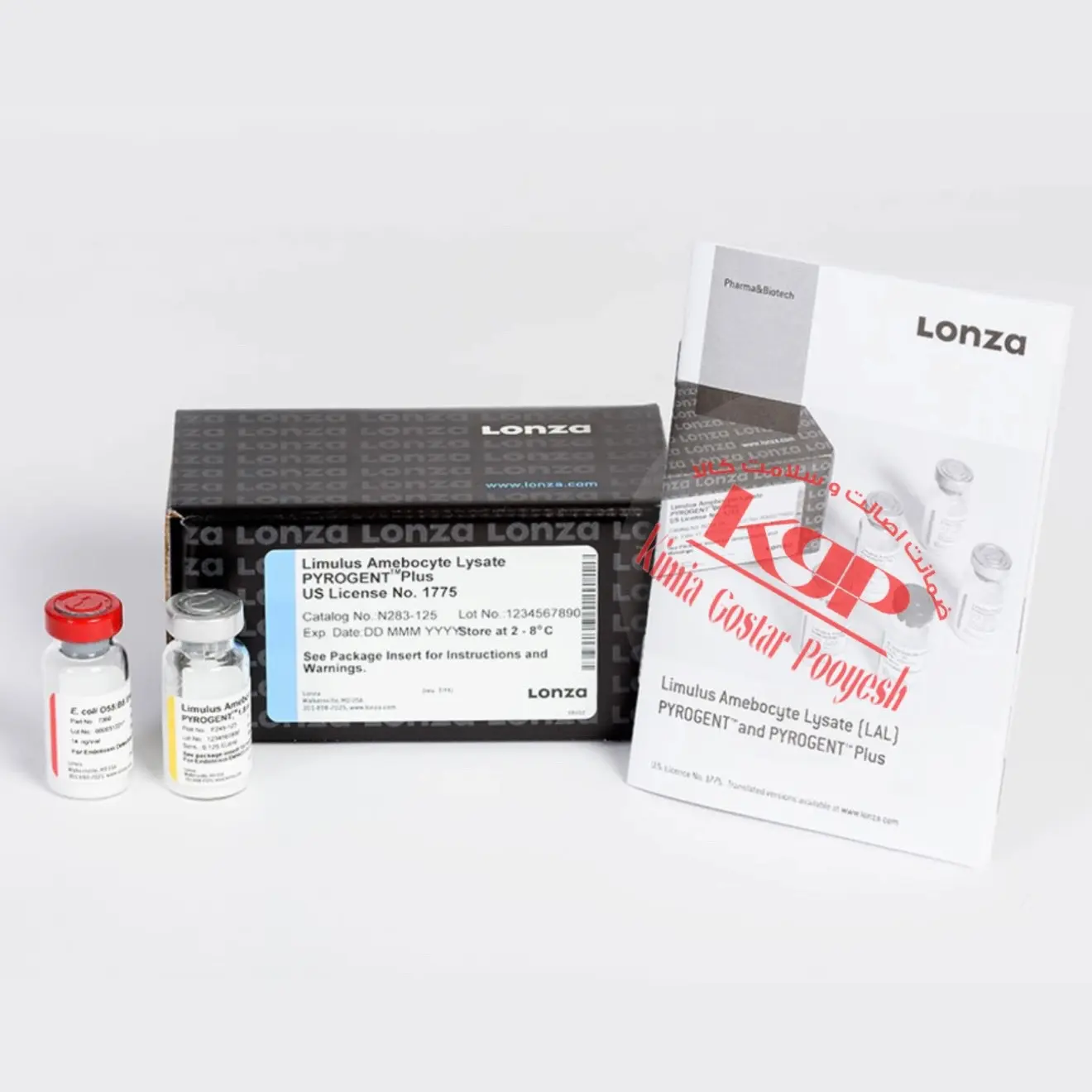
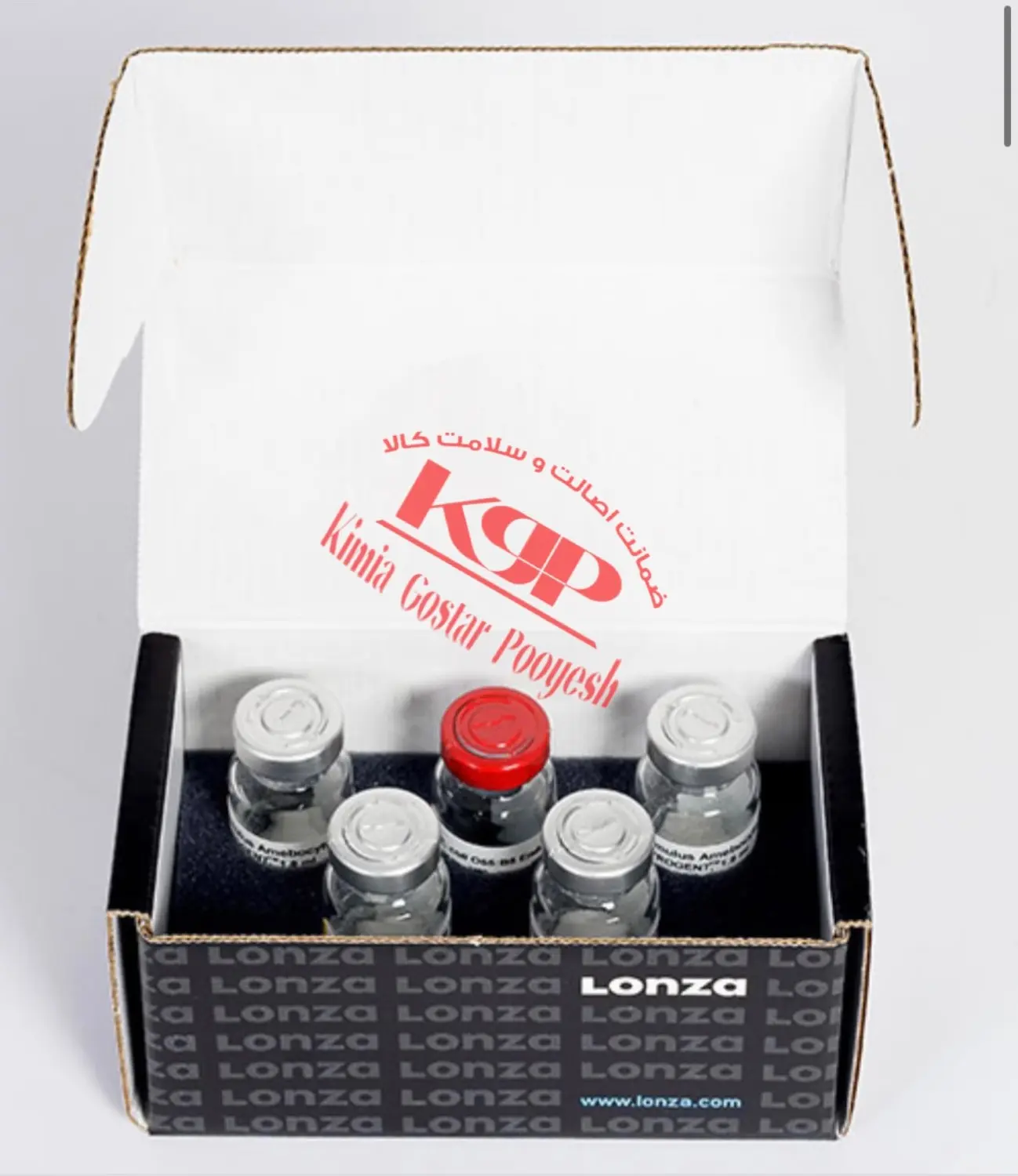
کیت تشخیص اندوتوکسین PYROGENT® Plus Gel Clot LAL Assay با شماره کاتالوگ N283-125، محصول شرکت پیشرو و معتبر Lonza، یک کیت کامل و استاندارد طلایی برای شناسایی و اندازهگیری اندوتوکسین به روش ژل کلات (Gel Clot) است. این کیت شامل لایزت LAL (Limulus Amebocyte Lysate) به همراه استاندارد اندوتوکسین کنترل (CSE) در یک جعبه کیت است و برای انجام ۶۴ تست با حساسیت ۱۲۵/۰ EU/ml طراحی شده است.
روش ژل کلات یکی از سادهترین و در عین حال معتبرترین روشهای کیفی تشخیص اندوتوکسین است که بر اساس واکنش آنزیمی لایزت استخراج شده از سلولهای خونی (آمِبوسیتها) خرچنگ نعلاسبی (Horseshoe Crab) عمل میکند. این روش نیازی به تجهیزات پیچیده و نرمافزارهای تحلیلی ندارد و با استفاده از یک حمام آب یا بلوک حرارتی قابل انجام است.
مبانی علمی روش تشخیص اندوتوکسین
اندوتوکسین چیست؟
اندوتوکسینها لیپوپلیساکاریدهای (LPS) موجود در غشای خارجی باکتریهای گرممنفی هستند. این ترکیبات دارای بخش الیگوساکاریدی آبدوست و بخش لیپید A آبگریز میباشند که عامل اصلی ایجاد پاسخهای پیروژنی (تبزا) در بدن محسوب میشوند. حضور اندوتوکسین در محصولات تزریقی، تجهیزات پزشکی و داروهای بیولوژیک میتواند عوارض خطرناکی از جمله تب، شوک و حتی سپسیس را در انسان ایجاد کند.
بر اساس مطالعات دانشگاه هاروارد و مؤسسه ملی سلامت (NIH)، اندوتوکسینها یکی از قویترین محرکهای سیستم ایمنی ذاتی انسان هستند و حتی مقادیر بسیار ناچیز آن (در حد نانوگرم) میتواند پاسخهای التهابی شدیدی ایجاد کند.
مکانیسم واکنش LAL
هنگامی که اندوتوکسینها با لایزت LAL تماس پیدا میکنند، یک آبشار آنزیمی پیچیده آغاز میشود که توسط محققان دانشگاه جانز هاپکینز در دهه ۱۹۶۰ کشف شد:
-
فعالسازی فاکتور C: اندوتوکسینها به فاکتور C (یک پروآنزیم) متصل شده و آن را به شکل فعال تبدیل میکنند.
-
فعالسازی فاکتور B: فاکتور C فعال، فاکتور B را به آنزیم پروتئازی فعال تبدیل میکند.
-
تشکیل آنزیم لختهکننده: فاکتور B فعال، آنزیم لختهکننده لیمولوس (Limulus Clotting Enzyme) را از فرم غیرفعال به فعال تبدیل میکند.
-
تشکیل ژل: آنزیم فعال، کوآگولوژن (پروتئین لختهشونده غیرفعال) را به کوآگولین (مونومرهای فعال) تبدیل میکند. مونومرهای کوآگولین از طریق دمهای آبگریز خود به هم متصل شده و پلیمرهایی تشکیل میدهند که به صورت لخته ژلاتینی در ته لوله قابل مشاهده است.
تحقیقات دانشگاه توکیو نشان داده است که این آبشار آنزیمی دارای حساسیت فوقالعادهای در تشخیص اندوتوکسین است و میتواند مقادیر کمتر از ۰٫۰۱ EU/ml را نیز شناسایی کند.
روش ژل کلات (Gel Clot)
در روش ژل کلات، پس از افزودن لایزت به نمونه و انکوباسیون در دمای ۳۷ درجه سانتیگراد به مدت ۱ ساعت، لوله آزمایش به آرامی ۱۸۰ درجه چرخانده میشود. اگر لخته ژلاتینی محکمی در ته لوله باقی بماند، نتیجه مثبت (+) و در غیر این صورت نتیجه منفی (-) ثبت میشود. این روش توسط فارماکوپه ایالات متحده (USP <85>) و فارماکوپه اروپا (EP 2.6.14) به عنوان روش مرجع تأیید شده است.
مشخصات فنی محصول
| ویژگی | مشخصات |
|---|---|
| نام محصول | PYROGENT® Plus Gel Clot LAL Assay (with Endotoxin) |
| شماره کاتالوگ | N283-125 |
| برند | Lonza |
| تعداد تست | ۶۴ تست |
| حساسیت (λ) | ۱۲۵/۰ EU/ml |
| محتویات | ۴ ویال لایزت (هر ویال ۱۶ تست) + ۱ ویال استاندارد اندوتوکسین |
| روش آزمایش | کیفی (Gel Clot) |
| شرایط نگهداری | ۲ تا ۸ درجه سانتیگراد |
مزایای کلیدی کیت
-
کیفیت نتایج خوانا و آسان: نتایج به صورت کیفی و با مشاهده تشکیل یا عدم تشکیل ژل قابل بررسی است که نیاز به تجهیزات پیچیده و نرمافزارهای تحلیلی را حذف میکند.
-
عدم نیاز به خرید جداگانه استاندارد اندوتوکسین: کیت شامل استاندارد اندوتوکسین کنترل (CSE) است که هزینهها و مراحل آمادهسازی را کاهش میدهد.
-
مناسب برای آزمایشگاههای با تجهیزات محدود: این روش به غیر از حمام آب یا بلوک حرارتی و لولههای شیشهای عاری از پیروژن، به تجهیزات خاصی نیاز ندارد.
-
حساسیت استاندارد ۱۲۵/۰ EU/ml: این حساسیت مطابق با الزامات فارماکوپههای معتبر (USP <85> و EP 2.6.14) برای کنترل کیفی محصولات دارویی است.
-
قابلیت اطمینان بالا: بر اساس مطالعات دانشگاه میشیگان، روش ژل کلات دارای دقت و تکرارپذیری بالایی است و میزان خطای مثبت کاذب در آن کمتر از ۲٪ گزارش شده است.
کاربردهای بالینی و صنعتی
۱. صنعت داروسازی
کنترل کیفی محصولات تزریقی (پارانترال)، واکسنها و محصولات بیولوژیک بر اساس الزامات فارماکوپههای معتبر. سازمان غذا و داروی آمریکا (FDA) انجام آزمون LAL را برای تمام محصولات تزریقی اجباری کرده است.
۲. تجهیزات پزشکی
تست اندوتوکسین تجهیزات پزشکی ایمپلنتشونده و دستگاههای تماسیابنده با خون. بر اساس استاندارد ISO 10993، تمام تجهیزات پزشکی که با خون یا مایعات بدن تماس دارند باید عاری از اندوتوکسین باشند.
۳. کنترل کیفیت آبهای فرآیندی
آزمایش آبهای مورد استفاده در فرآیندهای تولید دارویی و صنایع حساس. آب مورد استفاده در تولید داروهای تزریقی باید دارای اندوتوکسین کمتر از ۰٫۲۵ EU/ml باشد.
۴. صنعت بیوتکنولوژی
کنترل کیفی محصولات بیولوژیک مانند آنتیبادیهای مونوکلونال، پروتئینهای نوترکیب و واکسنها. تحقیقات دانشگاه استنفورد نشان داده است که حضور اندوتوکسین در محصولات بیولوژیک میتواند باعث کاهش کارایی و افزایش عوارض جانبی شود.
۵. نانومواد و فرمولاسیونهای پیشرفته
این کیت در تحقیقات نانومواد و فرمولاسیونهای لیپوزومی برای تشخیص و اندازهگیری اندوتوکسین کاربرد دارد. تحقیقات مؤسسه فناوری ماساچوست (MIT) نشان داده است که نانومواد میتوانند باعث تداخل (Inhibition یا Enhancement) در آزمون LAL شوند و روش ژل کلات به عنوان یک روش استاندارد برای شناسایی این تداخلات استفاده میشود.
دستورالعمل دقیق انجام آزمون
گام اول: تأیید حساسیت معرف
برای هر لات جدید لایزت، باید حساسیت واقعی آن با استفاده از سری رقتهای استاندارد اندوتوکسین (۲λ، ۱λ، ۵/۰λ، ۲۵/۰λ) تعیین شود. حساسیت هندسی میانگین (Geometric Mean) نباید بیش از ۲ برابر و کمتر از ۵/۰ برابر حساسیت اسمی باشد.
گام دوم: آزمون تداخل (Inhibition/Enhancement)
برای اطمینان از عدم تداخل ماتریکس نمونه با آزمون، نمونه باید با استاندارد اندوتوکسین در غلظت ۲λ اسپایک (Spike) شود. میزان بازیابی باید بین ۵۰ تا ۲۰۰ درصد باشد. در صورت تداخل، نمونه باید تا حداکثر رقت معتبر (MVD) رقیق شود.
گام سوم: انجام آزمون اصلی
۱. نمونهها و استانداردها را در لولههای شیشهای ۱۰ × ۷۵ میلیمتر عاری از پیروژن آماده کنید.
۲. به هر لوله، حجم مساوی از لایزت بازسازی شده اضافه کنید.
۳. لولهها را به آرامی ورتکس کنید.
۴. به مدت ۶۰ دقیقه در حمام آب یا بلوک حرارتی ۳۷ درجه سانتیگراد انکوبه کنید.
۵. لولهها را با حرکت یکنواخت ۱۸۰ درجه بچرخانید و نتایج را ثبت کنید: (+) برای لخته محکم و (-) برای عدم تشکیل لخته.
محاسبه حداکثر رقت معتبر (MVD)
برای تعیین MVD از فرمول زیر استفاده میشود:
MVD = (EL × Sample Concentration) / λ
که در آن:
-
EL (Endotoxin Limit): حداکثر اندوتوکسین مجاز به ازای هر کیلوگرم وزن بدن (۵ EU/kg برای تمام روشهای تزریق به جز روش اینتراتکال که K=0.2 EU/kg است)
-
Sample Concentration: غلظت نمونه بر حسب mg/ml
-
λ (Lambda): حساسیت کیت (۱۲۵/۰ EU/ml)
شرایط نگهداری و پایداری
-
لیوفیلیزه: کیت باید در دمای ۲ تا ۸ درجه سانتیگراد نگهداری شود.
-
پس از بازسازی: لایزت بازسازی شده تا ۲۴ ساعت در دمای ۲ تا ۸ درجه سانتیگراد و تا ۴ هفته در دمای ۱۰- درجه سانتیگراد قابل نگهداری است (حداکثر یک بار انجماد-ذوب).
-
استاندارد اندوتوکسین بازسازی شده: تا ۴ هفته در دمای ۲ تا ۸ درجه سانتیگراد و حداکثر ۱ روز برای رقتهای نهایی توصیه میشود.
عیبیابی مشکلات رایج
بر اساس راهنمای فنی Lonza و مطالعات دانشگاه کالیفرنیا، مشکلات رایج در آزمون ژل کلات به دو دسته اصلی تقسیم میشوند:
۱. عدم تشکیل لخته در نمونههای انتظار مثبت
-
احتمال تداخل (Inhibition) ناشی از ماتریکس نمونه
-
pH نامناسب نمونه (محدوده مطلوب ۰/۶ تا ۰/۸)
-
وجود مواد شلاتهکننده (مانند EDTA) که یونهای کلسیم و منیزیم مورد نیاز واکنش را غیرفعال میکنند
-
تکنیک نامناسب انکوباسیون یا چرخاندن لولهها
۲. تشکیل لخته در نمونههای انتظار منفی
-
آلودگی متقاطع (Cross-contamination) با اندوتوکسین
-
استفاده از ظروف یا آب غیراستاندارد
-
pH نامناسب نمونه (کمتر از ۶ یا بیشتر از ۸)
-
فعالسازی خودبهخودی لایزت به دلیل تکنیک نامناسب
ملاحظات ویژه برای نمونههای روغنی و چرب
اندوتوکسینها به دلیل ماهیت لیپیدی خود، تمایل به همراهی با روغنها دارند و به راحتی وارد فاز آبی مخلوطهای آب-روغن نمیشوند. برای این نوع نمونهها، Lonza استفاده از ماده پخشکننده PYROSPERSE® را توصیه میکند تا اندوتوکسین از روغن جدا شده و قابل تشخیص باشد.
جمعبندی و توصیه نهایی
کیت PYROGENT® Plus Gel Clot LAL Assay با شماره کاتالوگ N283-125 از Lonza، یک محصول استاندارد و معتبر برای کنترل کیفی اندوتوکسین در صنایع داروسازی، تجهیزات پزشکی و محصولات بیولوژیک است. روش ژل کلات با وجود سادگی، همچنان به عنوان یکی از روشهای مرجع در فارماکوپههای معتبر جهان (USP، EP، JP) شناخته میشود و برای آزمایشگاههایی که به دنبال روشی قابل اعتماد، هزینهموثر و بدون نیاز به تجهیزات پیچیده هستند، گزینهای ایدهال محسوب میشود.
تحقیقات دانشگاه آکسفورد نشان داده است که ترکیب روش ژل کلات با روشهای کروماتوگرافی میتواند دقت تشخیص را تا ۹۹٪ افزایش دهد. همچنین مطالعات دانشگاه سیدنی تأیید کرده است که این روش برای تشخیص اندوتوکسین در انواع مختلف ماتریکسهای بیولوژیک و صنعتی قابل استفاده است.
برای دریافت اطلاعات تکمیلی مانند برگه اطلاعات ایمنی (SDS) و گواهی آنالیز (CoA)، لطفاً با کارشناسان فروش مارکت شیمی تماس بگیرید.
English Section
Product Overview
The PYROGENT® Plus Gel Clot LAL Assay with catalog number N283-125 from Lonza is a complete and gold-standard kit for endotoxin detection and quantification using the Gel Clot method. This kit includes LAL (Limulus Amebocyte Lysate) along with Control Standard Endotoxin (CSE) in a single kit package and is designed for 64 tests with a sensitivity of 0.125 EU/ml.
The Gel Clot method is one of the simplest yet most reliable qualitative methods for endotoxin detection, based on the enzymatic reaction of lysate extracted from the blood cells (amoebocytes) of the Horseshoe Crab. This method requires no complex equipment or analytical software and can be performed using a water bath or heating block.
Scientific Basis of Endotoxin Detection Method
What is Endotoxin?
Endotoxins are lipopolysaccharides (LPS) present in the outer membrane of Gram-negative bacteria. These compounds consist of a hydrophilic oligosaccharide portion and a hydrophobic lipid A portion, which is the primary cause of pyrogenic (fever-inducing) responses in the human body. The presence of endotoxins in injectable products, medical devices, and biological drugs can cause dangerous complications including fever, shock, and even sepsis in humans.
According to studies from Harvard University and the National Institutes of Health (NIH), endotoxins are among the most potent stimulators of the human innate immune system, and even extremely small amounts (in the nanogram range) can trigger severe inflammatory responses.
Mechanism of LAL Reaction
When endotoxins come into contact with LAL lysate, a complex enzymatic cascade is initiated, as discovered by researchers at Johns Hopkins University in the 1960s:
-
Activation of Factor C: Endotoxins bind to Factor C (a proenzyme) and convert it to its active form.
-
Activation of Factor B: Activated Factor C converts Factor B to an active protease enzyme.
-
Formation of Clotting Enzyme: Active Factor B converts the Limulus Clotting Enzyme from its inactive to active form.
-
Gel Formation: The active enzyme converts coagulogen (an inactive clottable protein) to coagulin (active monomers). Coagulin monomers aggregate through their hydrophobic tails to form polymers that appear as a gelatinous clot at the bottom of the tube.
Research from the University of Tokyo has demonstrated that this enzymatic cascade has exceptional sensitivity in detecting endotoxins and can identify amounts as low as 0.01 EU/ml.
Gel Clot Method
In the Gel Clot method, after adding lysate to the sample and incubating at 37°C for 1 hour, the test tube is gently inverted 180 degrees. If a firm gelatinous clot remains at the bottom of the tube, the result is positive (+); otherwise, the result is negative (-). This method is approved as a reference method by the United States Pharmacopeia (USP <85>) and the European Pharmacopeia (EP 2.6.14).
Technical Specifications
| Feature | Specification |
|---|---|
| Product Name | PYROGENT® Plus Gel Clot LAL Assay (with Endotoxin) |
| Catalog Number | N283-125 |
| Brand | Lonza |
| Number of Tests | 64 tests |
| Sensitivity (λ) | 0.125 EU/ml |
| Contents | 4 vials lysate (16 tests each) + 1 vial endotoxin standard |
| Test Method | Qualitative (Gel Clot) |
| Storage Conditions | 2 to 8°C |
Key Advantages of the Kit
-
Easy-to-read qualitative results: Results are assessed qualitatively by observing gel formation or lack thereof, eliminating the need for complex equipment and analytical software.
-
No separate purchase of endotoxin standard required: The kit includes Control Standard Endotoxin (CSE), reducing costs and preparation steps.
-
Suitable for laboratories with limited equipment: This method requires only a water bath or heating block and pyrogen-free glass tubes, with no special equipment needed.
-
Standard sensitivity of 0.125 EU/ml: This sensitivity meets the requirements of major pharmacopeias (USP <85> and EP 2.6.14) for pharmaceutical quality control.
-
High reliability: According to University of Michigan studies, the Gel Clot method demonstrates high accuracy and reproducibility, with a false positive rate of less than 2%.
Clinical and Industrial Applications
1. Pharmaceutical Industry
Quality control of injectable products (parenterals), vaccines, and biological products according to pharmacopeia requirements. The FDA mandates LAL testing for all injectable products.
2. Medical Devices
Endotoxin testing of implantable medical devices and blood-contacting devices. According to ISO 10993 standards, all medical devices that come into contact with blood or body fluids must be endotoxin-free.
3. Process Water Quality Control
Testing water used in pharmaceutical manufacturing processes and sensitive industries. Water used in injectable drug production must contain less than 0.25 EU/ml of endotoxins.
4. Biotechnology Industry
Quality control of biological products such as monoclonal antibodies, recombinant proteins, and vaccines. Stanford University research has shown that endotoxin presence in biological products can reduce efficacy and increase side effects.
5. Nanomaterials and Advanced Formulations
This kit is used in nanomaterial and liposomal formulation research for endotoxin detection and quantification. Research from the Massachusetts Institute of Technology (MIT) has shown that nanomaterials can cause interference (Inhibition or Enhancement) in the LAL test, and the Gel Clot method serves as a standard approach for identifying these interferences.
Detailed Test Procedure
Step 1: Reagent Sensitivity Confirmation
For each new lysate lot, the actual sensitivity must be determined using a series of endotoxin standard dilutions (2λ, 1λ, 0.5λ, 0.25λ). The geometric mean sensitivity must not be more than 2 times or less than 0.5 times the nominal sensitivity.
Step 2: Interference Test (Inhibition/Enhancement)
To ensure no matrix interference with the test, the sample must be spiked with endotoxin standard at a concentration of 2λ. Recovery must be between 50% and 200%. If interference occurs, the sample must be diluted to the maximum valid dilution (MVD).
Step 3: Main Test Performance
-
Prepare samples and standards in 10 × 75 mm pyrogen-free glass tubes.
-
Add an equal volume of reconstituted lysate to each tube.
-
Gently vortex the tubes.
-
Incubate for 60 minutes in a 37°C water bath or heating block.
-
Invert the tubes with a smooth 180-degree motion and record results: (+) for firm clot and (-) for no clot formation.
Maximum Valid Dilution (MVD) Calculation
The MVD is determined using the following formula:
MVD = (EL × Sample Concentration) / λ
Where:
-
EL (Endotoxin Limit): Maximum allowed endotoxin per kg of body weight (5 EU/kg for all injection routes except intrathecal where K=0.2 EU/kg)
-
Sample Concentration: Sample concentration in mg/ml
-
λ (Lambda): Kit sensitivity (0.125 EU/ml)
Storage and Stability Conditions
-
Lyophilized: Kit must be stored at 2 to 8°C.
-
After Reconstitution: Reconstituted lysate can be stored for up to 24 hours at 2 to 8°C and up to 4 weeks at -10°C (maximum one freeze-thaw cycle).
-
Reconstituted Endotoxin Standard: Can be stored for up to 4 weeks at 2 to 8°C, with final dilutions recommended for use within 1 day.
Common Troubleshooting
Based on Lonza technical guidelines and University of California studies, common issues in the Gel Clot test fall into two main categories:
1. No Clot Formation in Expected Positive Samples
-
Possible matrix interference (Inhibition)
-
Improper sample pH (optimal range: 6.0 to 8.0)
-
Presence of chelating agents (e.g., EDTA) that deactivate calcium and magnesium ions required for the reaction
-
Improper incubation or tube inversion technique
2. Clot Formation in Expected Negative Samples
-
Cross-contamination with endotoxins
-
Use of non-standard containers or water
-
Improper sample pH (below 6 or above 8)
-
Spontaneous lysate activation due to improper technique
Special Considerations for Oily and Lipidic Samples
Due to their lipid nature, endotoxins tend to associate with oils and do not readily partition into the aqueous phase of water-oil mixtures. For such samples, Lonza recommends using PYROSPERSE® dispersing agent to separate endotoxin from the oil phase and enable detection.
Summary and Final Recommendation
The PYROGENT® Plus Gel Clot LAL Assay with catalog number N283-125 from Lonza is a standard and reliable product for endotoxin quality control in the pharmaceutical, medical device, and biological products industries. Despite its simplicity, the Gel Clot method remains recognized as one of the reference methods in major pharmacopeias worldwide (USP, EP, JP) and is an ideal choice for laboratories seeking a reliable, cost-effective method that requires no complex equipment.
Research from the University of Oxford has demonstrated that combining the Gel Clot method with chromatographic techniques can increase detection accuracy by up to 99%. Additionally, studies from the University of Sydney have confirmed that this method is applicable for endotoxin detection in various biological and industrial matrix types.
For additional information such as Safety Data Sheets (SDS) and Certificates of Analysis (CoA), please contact the sales experts at Market Shimi.
For price inquiries, stock availability, and ordering the PYROGENT® Plus kit with catalog number N283-125, please contact the Market Shimi sales team.
📊 جدول مقایسه روشهای تشخیص اندوتوکسین / Comparison of Endotoxin Detection Methods
| روش / Method | حساسیت / Sensitivity | مزایا / Advantages | معایب / Disadvantages |
|---|---|---|---|
| Gel Clot (کیفی/Qualitative) | ۰٫۱۲۵ EU/ml | ساده، کمهزینه، بدون نیاز به تجهیزات / Simple, low-cost, no equipment needed | فقط کیفی، حساسیت محدود / Qualitative only, limited sensitivity |
| Chromogenic (کمی/Quantitative) | ۰٫۰۰۵ EU/ml | دقیق، قابل اندازهگیری کمی / Precise, quantitative | نیاز به اسپکتروفتومتر / Requires spectrophotometer |
| Turbidimetric (کمی/Quantitative) | ۰٫۰۱ EU/ml | قابل اتوماسیون، دقیق / Automatable, precise | نیاز به میکروپلیتریدر / Requires microplate reader |
| rFC (نوترکیب/Recombinant) | ۰٫۰۰۵ EU/ml | بدون استفاده از حیوانات، دقیق / Animal-free, precise | هزینه بالا، جدید / High cost, newer method |
📚 منابع علمی / Scientific References
-
Iwanaga, S. (2007). "Biochemical principle of Limulus test for detecting bacterial endotoxins." Proceedings of the Japan Academy, Series B, 83(4): 110-119.
-
Williams, K.L. (2019). "Endotoxins: Pyrogens, LAL Testing and Depyrogenation." CRC Press, 4th Edition.
-
United States Pharmacopeia (USP) Chapter <85>: "Bacterial Endotoxins Test."
-
European Pharmacopeia (EP) 2.6.14: "Bacterial Endotoxins."
-
Ding, J.L., Ho, B. (2010). "Endotoxin detection – from limulus amebocyte lysate to recombinant factor C." Subcellular Biochemistry, 53: 187-208.
-
Malyala, P., Singh, M. (2008). "Endotoxin limits in biological products." Pharmaceutical Technology, 32(10): 106-112.
-
Ong, K.G., et al. (2014). "Nanomaterial interference in LAL assays." Nature Nanotechnology, 9(8): 581-585.
-
FDA Guidance for Industry: "Pyrogen and Endotoxins Testing." (2012).
-
Cooper, J.F. (2001). "Resolving LAL test interferences." BioPharm International, 14(5): 28-38.
-
Poole, S., et al. (2003). "Endotoxin detection in biological products." Journal of Immunological Methods, 280(1-2): 1-10.
محصولات مرتبط
مشاهده همه


-Glucose monohydrate.jpg)
 chloride hexahydrate.jpg)

آدرس فروشگاه :
تهران ، خیابان انقلاب ، خیابان صفی علیشاه ، خیابان مصباح ، کوچه شفیعی ، پلاک3 ، واحد3


ایمیل پشتیبانی :
info@KimiaGostar.com
ایمیل فروش :
sales@KimiaGostar.com






مارکت شیمی | فروشگاه آنلاین مواد شیمیایی آزمایشگاهی صنعتی شرکت کیمیاگسترپویش
فروشگاه انلاین مارکت چمی توسط شرکت کیمیاگستر پویش با پشتوانه 20سال سابقه درخشان در امر واردات و فروش و توزیع موادشیمیایی آزمایشگاهی،صنعتی و مواد اولیه دارویی و با اتکا به موجودی بیش از 1000عنوان کالای شیمیایی در انبار مجموعه، با هدف تسهیل خدمت رسانی به پزوهشگران فرهیخته کشور عزیزمان ایران راه اندازی گردید.در این فروشگاه سعی کردیم به دغدغه های بحق مصرف کنندگان محصولات شیمیایی راهکارهای مناسب ارائه دهیم.



طراحی و توسعه :
website designed by NONEGAR PARDAZESH, developed by NONEGAR
